 AfriKDP
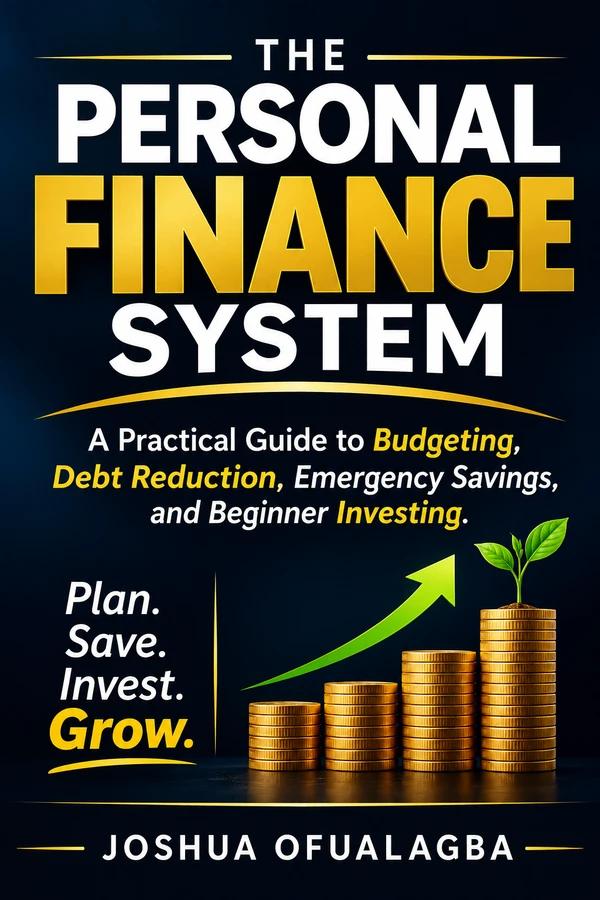
THE PERSONAL FINANCE SYSTEM
About This Book
A Practical Guide to Budgeting, Debt Reduction, Emergency Savings, and Beginner Investing
By Joshua Ofualagba
Are you tired of wondering where your money goes, struggling to save, or feeling overwhelmed by debt? The Personal Finance System is a practical guide designed to help you take control of your finances, make smarter money decisions, and build a more secure financial future.
Whether you are a beginner, an employee, a small business owner, or an aspiring entrepreneur, this book breaks down personal finance into simple, actionable steps you can apply in everyday life.
Inside this book, you will discover how to:
- Create a realistic budget and manage your income effectively.
- Track your spending and eliminate unnecessary expenses.
- Build an emergency fund for unexpected situations.
- Understand debt and develop a practical repayment strategy.
- Set meaningful savings goals and stay consistent.
- Learn the fundamentals of investing and long-term wealth building.
- Strengthen your financial habits and improve your money management skills.
You will also find practical worksheets, tracking tools, and a 30-day financial reset plan to help you turn what you learn into action.
You do not need to be wealthy to start managing money wisely. You need the right knowledge, a clear plan, and the discipline to take consistent steps.
Take control of your money today. Build better financial habits. Create a stronger financial future.
The Personal Finance System is an educational guide. It does not promise guaranteed wealth or investment returns.
The Personal Finance System by Joshua Ofualagba offers actionable steps to help readers manage their money effectively. This guide covers budgeting, debt reduction, emergency savings, and beginner investing, making personal finance accessible for everyone.
Who this book is for
- Beginners in personal finance
- Employees looking to manage money better
- Small business owners
- Aspiring entrepreneurs
What you'll learn
- Create a realistic budget
- Track spending and eliminate leaks
- Build an emergency fund
- Understand debt and repayment strategies
- Set and achieve savings goals
- Learn basic investing principles
- Review and adjust financial plans regularly
Read a free sample 2 pages from the book
THE PERSONAL FINANCE SYSTEM A Practical Guide to Budgeting, Debt Reduction, Emergency Savings, and Beginner Investing BY JOSHUA OFUALAGBA THE PERSONAL FINANCE SYSTEM • JOSHUA OFUALAGBA
Introduction: Build a System, Not Just a Wish Why money feels difficult Many people work hard and still feel financially stuck. Money arrives, bills are paid, unexpected costs appear, and the month ends with little left. The problem is not always how much a person earns. It can also be the absence of a clear system for deciding what money should do. A personal finance system is a set of habits: know what comes in, decide what must go out, save for predictable and unexpected needs, manage debt carefully, and make informed long-term decisions. It does not require a high income or complicated spreadsheets. It requires honesty, consistency, and a willingness to improve one step at a time. This book is educational. It is not individualized financial, tax, legal, or investment advice. Rules, products, fees, taxes, and protections differ by country. Check local regulations and consult a qualified professional before making major financial decisions. What you will build By the end, you will have a money snapshot, a working monthly budget, a debt action plan, a starter emergency fund, a savings structure, and a basic framework for evaluating investments. You will also have a 30-day action plan to put the system into practice. Chapter 1: Get a Clear Picture of Your Money Calculate your monthly cash flow Start with the money you actually receive, not the salary or sales figure you hope to receive. List take-home pay, business income after business costs, freelance payments, and other reliable income. If income changes, use a cautious average from recent months and plan using a lower-income month where possible. Next, list spending. Separate fixed costs such as rent, loan payments, school fees, and subscriptions from variable costs such as food, transport, electricity, and personal purchases. Include irregular expenses too: annual insurance, repairs, medical costs, holidays, and school-related expenses. These costs may not happen every month, but they are still part of your financial life. Find your monthly balance Monthly balance = total take-home income − total spending. A positive balance means money remains. A negative balance means spending is greater than income, so the plan needs attention. Do not hide small purchases; repeated small amounts can become a large monthly total. Action step Review bank statements, mobile money history, receipts, and cash spending from the last 30 days. Group each expense into housing, food, transport, utilities, health, debt, family, subscriptions, business, savings, and other. Circle the three categories where you have the most control. Chapter 2: Build a Budget That Works in Real Life Give every dollar a purpose A budget is a plan for your income, not a punishment. Before the month begins, assign money to essentials, debt payments, savings, and flexible spending. A useful budget is realistic enough to follow and flexible enough to adjust
when life changes. Try a percentage framework One common starting framework is 50/30/20: around 50% for needs, 30% for wants, and 20% for savings and debt reduction beyond minimums. These are guideposts, not rules. If housing or transport costs are high, your needs may exceed 50%. If income is low or debt is expensive, you may need to reduce wants and prioritize essentials and minimum payments first. Use a zero-based budget In a zero-based budget, you assign all planned income to categories until income minus planned allocations equals zero. This does not mean spending everything. Savings, emergency funds, and extra debt payments are categories too. The aim is to make every dollar intentional. Budget for irregular costs Add up expected annual or occasional expenses…
End of sample. The full book is 8 pages on Afri KDP.
Questions about this book
What if I have no prior knowledge of personal finance?
This book is designed for beginners and breaks down personal finance into simple, actionable steps that anyone can apply.
Loading reviews...

Loading…
A download link appears on this page as soon as your payment is confirmed, and a permanent copy of the link is emailed to you.
By card from anywhere. In Nigeria you can also pay by bank transfer, USSD or mobile money. Your card details are entered on Paystack's secure page, never on AfriKDP.
Yes. The file opens on phones, tablets, computers and eReaders.
Yes, with an AfriKDP reading plan, which opens every book in the online reader and pays the author for every page you read.
Write to [email protected] with your email address and we will help. See our return policy.