 AfriKDP
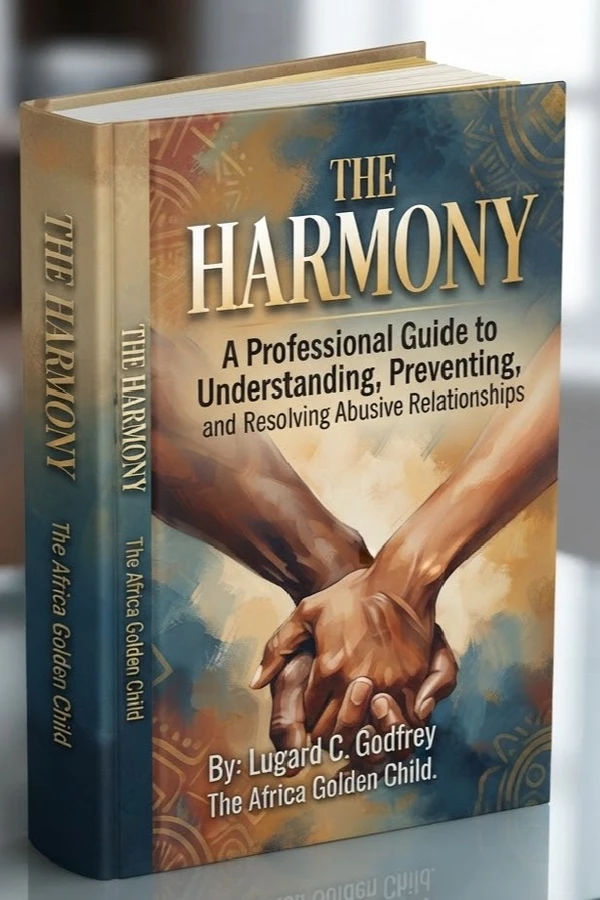
THE HARMONY
About This Book
Drawing on global and sub-Saharan African public health data, real-life survivor accounts, expert insights from counselors, advocates, and faith leaders, and practical workbook tools, this book challenges cultural silences and equips individuals, families, and communities to build relationships rooted in mutual respect, accountability, and safety.
The Harmony is a professional guide that explores the causes of domestic violence and provides practical tools for prevention and resolution. Drawing on real-life accounts and expert insights, it aims to foster relationships based on mutual respect and safety.
Who this book is for
- Individuals in abusive relationships
- Counselors and therapists
- Community leaders
- Faith leaders
- Families seeking to understand abuse
What you'll learn
- What constitutes abuse beyond physical violence
- The root causes of intimate partner violence
- Warning signs and safety planning
- Cultural perspectives on conflict resolution
- How to rebuild trust after betrayal
- The role of community in healing
Read a free sample 4 pages from the book
❧ THE HARMONY A Professional Guide to Understanding, Preventing, and Resolving Abusive Relationships ❧❧❧ BY LUGARD C. GODFREY THE AFRICA GOLDEN CHILD ROLCANAAN GLOBAL PRESS LTD. LAGOS, NIGERIA
❧ DEDICATION All glory belongs to God. To my wife, Joy Nmesomachi, with deepest appreciation for her support and unwavering love through every season of this work. ❧
Endorsement "The Harmony addresses one of the most pressing yet often silenced issues in our society — domestic abuse. Lugard Godfrey brings a uniquely African perspective that combines research, practical wisdom, and cultural understanding. This book should be in every home, church, and community center across the continent." — An Early Reader
THE HARMONY 5
THE HARMONY PART SIX: The Path Forward..................................................................................55 Chapter 24: Breaking the Cycle for the Next Generation.................................................56 Chapter 25: A Final Call to Action—The Harmony We All Deserve.................................58 Appendix A: Resources and Support................................................................................63 Appendix B: Visual Diagrams............................................................................................64 Appendix C: Workbook Section........................................................................................68 Appendix D: References.....................................................................................................71 Index...................................................................................................................................72 About the Author................................................................................................................75 7
THE HARMONY Foreword Every day, in homes across Africa and the world, women and men suffer in silence. Their stories are told not in headlines but in whispered confessions to friends, in tears shed behind closed doors, and in the hollow eyes of children who learn that love hurts. This book is for them. It is also for those who have never raised a hand in anger but have wounded with words. For those who have been wounded and wondered if they deserved it. For those who want to break cycles they inherited. For those who believe that love should build, not destroy. The essence of this book is to create a remedy to abusive relationships — understanding what causes them, how to avert them, and how to resolve issues before they escalate into violence. 8
THE HARMONY Introduction: Beyond the Headlines The Numbers That Demand Our Attention Domestic violence is one of the most pervasive human rights and public health issues globally. The World Health Organization estimates that approximately 1 in 3 women worldwide experience physical or sexual violence in their lifetime. In sub-Saharan Africa, the figures are devastating: •Across 25 sub-Saharan African countries, nearly 45% of women report experiencing at least one form of gender-based violence. Prevalence varies significantly by country, with some nations reporting rates exceeding 50%. •In Nigeria, research indicates that approximately 1 in 3 married women have experienced intimate partner violence. Some studies report higher lifetime exposure rates when including all forms of physical, sexual, and psychological violence, though figures vary considerably depending on methodology and population studied. •21,700 women and girls were killed by intimate partners or family members in Africa in 2023 — a rate of 2.9 per 100,000, the highest of any region globally. •Sub-Saharan Africa has the second highest prevalence of children exposed to intimate partner violence at 32%, affecting an estimated 187 million children. These statistics represent not merely numbers, but lives disrupted, dreams shattered, and futures stolen. 9
THE HARMONY Glossary of Key Terms Coercive Control: A pattern of behavior that seeks to strip away a person's autonomy and independence through intimidation, threats, humiliation, surveillance, and control of finances or movement. Emotional Abuse: Non-physical behaviors intended to control, isolate, or frighten a partner through criticism, humiliation, threats, manipulation, or constant monitoring. Gaslighting: A form of psychological manipulation in which the abuser makes the victim question their own memory, perception, or sanity, often by denying events that occurred or minimizing the victim's feelings. Intimate Partner Violence (IPV): Physical, sexual, or psychological harm by a current or former partner or spouse. Physical Abuse: Any intentional act causing injury, trauma, or bodily harm…
End of sample. The full book is 74 pages on Afri KDP.
Questions about this book
What types of abuse are discussed in the book?
The book covers physical, emotional, and psychological abuse, emphasizing that abuse can manifest in various forms beyond just physical violence.
Loading reviews...

Loading…
A download link appears on this page as soon as your payment is confirmed, and a permanent copy of the link is emailed to you.
By card from anywhere. In Nigeria you can also pay by bank transfer, USSD or mobile money. Your card details are entered on Paystack's secure page, never on AfriKDP.
Yes. The file opens on phones, tablets, computers and eReaders.
Yes, with an AfriKDP reading plan, which opens every book in the online reader and pays the author for every page you read.
Write to [email protected] with your email address and we will help. See our return policy.