 AfriKDP
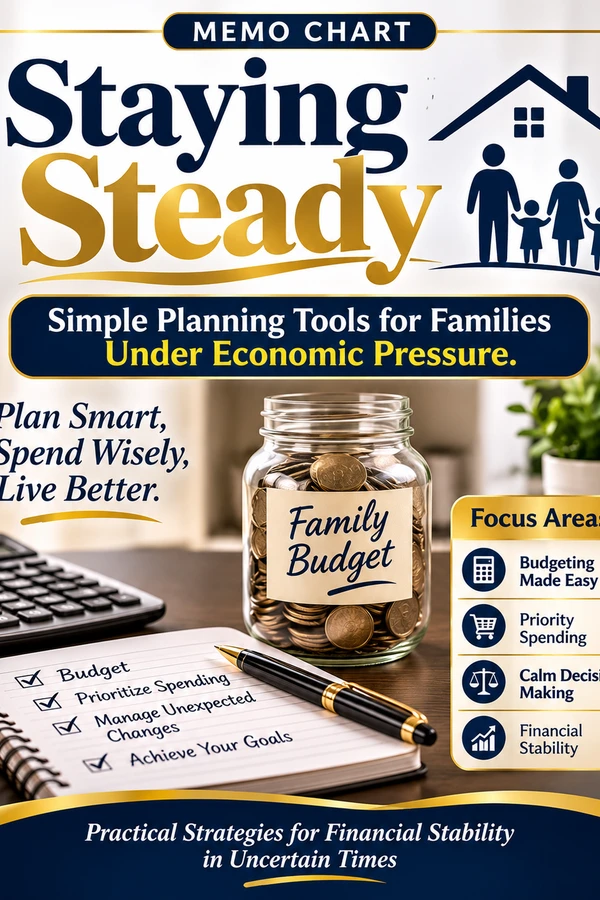
Staying Steady
About This Book
Stay Steady is a practical guide designed to help individuals and families take control of their finances. It provides simple tools and strategies for budgeting, prioritizing expenses, and making informed financial decisions, particularly during economic pressure.
Who this book is for
- Individuals seeking financial stability
- Families under economic pressure
- Those looking to improve money management skills
- Readers interested in personal finance
What you'll learn
- How to create a simple budget
- Methods for tracking expenses without burnout
- Strategies for handling financial stress
- Tips for prioritizing spending and saving
- Ways to communicate about money effectively
Read a free sample 3 pages from the book
STAYING STEADYPart One: Steady Footing CHAPTER 1 Why Steadiness Beats Perfection When money gets tight, many people believe they need a perfect plan before they can start. They do not. What families need most is steadiness: a few simple habits you can keep doing even when the month is messy. This book is built around small tools. Each chapter fits on one page and takes only a few minutes to read. You can go in order, or jump to the chapter that matches what you are facing today. •A rough plan you use beats a perfect plan you avoid. •Small, repeated actions lower stress faster than big, occasional ones. •You are allowed to start with incomplete numbers. •Progress is measured in calmer decisions, not in a flawless spreadsheet. TRY THIS Finish this sentence in writing: "The thing about money that worries me most right now is..." Keep it where you can see it. MY NOTES 3Staying Steady
STAYING STEADYPart One: Steady Footing CHAPTER 2 What Economic Pressure Does to Decisions Financial stress uses up mental energy. When you are worried about rent, groceries, or a shift being cut, it becomes harder to plan, compare options, and resist quick fixes. This is not a character flaw. It is how stress affects most people's thinking. The good news is that simple structure takes pressure off your memory and willpower. Lists, set check-in times, and written rules do the work so your tired brain does not have to. Common stress reactions include: •Avoiding the mail, the bank app, or the conversation. •Impulse spending for short-term relief. •Snap decisions made out of fear. •Feeling frozen and doing nothing at all. TRY THIS Notice which of these you tend to do. Naming your pattern is the first step to interrupting it. MY NOTES 4Staying Steady
STAYING STEADYPart One: Steady Footing CHAPTER 3 The Pause Routine Before any money decision made under stress, pause. A short, repeatable routine keeps you from reacting to the loudest worry in the moment. •Breathe: in for four counts, out for six, three times. •Name it: say what happened in one plain sentence. •Ask: is this urgent today, this week, or later? •Choose one next step, not ten. Most money problems feel urgent but are not due in the next hour. Giving yourself even ten minutes often changes the decision you make. TRY THIS Practice the routine tonight on something small, like a bill that arrived, so it feels familiar when you need it. MY NOTES 5Staying Steady
STAYING STEADYPart One: Steady Footing CHAPTER 4 Getting Your Household on the Same Page Everyone who lives in your home is affected by money, even if they are not part of the decisions.…
End of sample. The full book is 37 pages on Afri KDP.
Questions about this book
What if I'm not good at budgeting?
Budgeting doesn't have to be perfect. This book emphasizes steadiness and small, manageable actions over perfection, making it accessible for everyone.
Loading reviews...

Loading…
A download link appears on this page as soon as your payment is confirmed, and a permanent copy of the link is emailed to you.
By card from anywhere. In Nigeria you can also pay by bank transfer, USSD or mobile money. Your card details are entered on Paystack's secure page, never on AfriKDP.
Yes. The file opens on phones, tablets, computers and eReaders.
Yes, with an AfriKDP reading plan, which opens every book in the online reader and pays the author for every page you read.
Write to [email protected] with your email address and we will help. See our return policy.