 AfriKDP
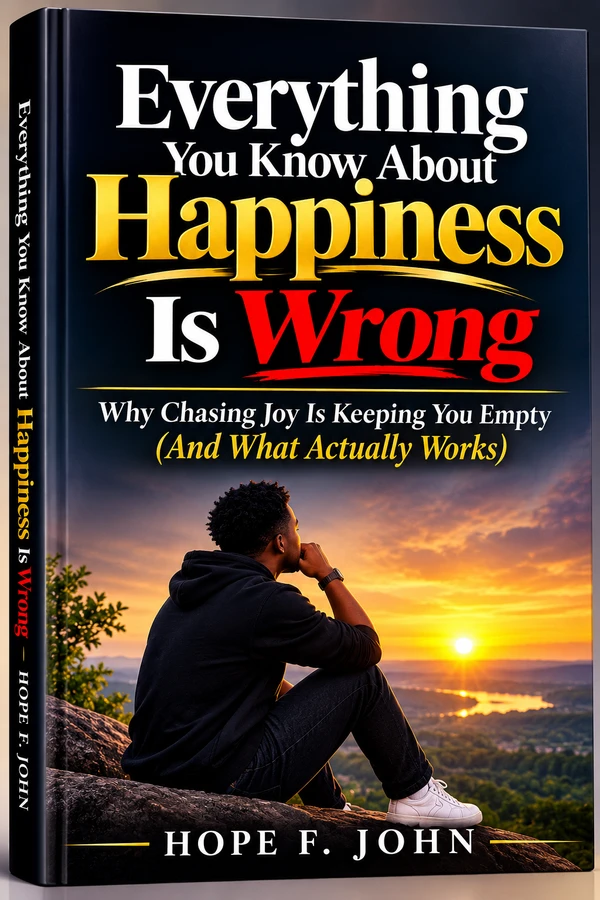
EVERYTHING YOU KNOW ABOUT HAPPINESS IS WRONG
About This Book
Why Chasing Joy Is Keeping You Empty (And What Actually Works)
by Hope F. John
What if the very things you’ve been told will make you happy are the reason you still feel empty?
In this eye-opening and encouraging book, Hope F. John gently challenges the popular myths about happiness and shows why constantly chasing joy often leaves us more drained than fulfilled. Drawing on real-life insight and practical wisdom, she reveals a different path one that leads to lasting contentment, deeper peace, and a richer sense of purpose.
If you’ve ever felt like you’re doing everything “right” yet still come up short, this book is for you. Discover what actually works, let go of the pressure to always feel happy, and start building a life that truly satisfies.
A refreshing, hopeful guide for anyone ready to stop chasing and start living.
Hope F. John's book challenges common beliefs about happiness, revealing that the pursuit of joy often leads to emptiness. It offers insights into building a more fulfilling life through understanding struggle and finding deeper meaning.
Who this book is for
- Anyone feeling unfulfilled
- Readers questioning happiness myths
- Individuals seeking deeper purpose
- Those tired of chasing joy
- People wanting practical wisdom
What you'll learn
- The misconceptions about happiness
- Why happiness isn't a destination
- How to embrace struggle
- The importance of presence over performance
- Ways to cultivate lasting fulfillment
- Strategies for dealing with restlessness
- How to build a meaningful life
Read a free sample 6 pages from the book
EVERYTHING YOU KNOW ABOUT HAPPINESS IS WRONG Why Chasing Joy Is Keeping You Empty (And What Actually Works) HOPE F. JOHN
For everyone who has done everything “right” and still felt the quiet emptiness grow.
ABOUT THE BOOK Most of what we have been taught about happiness is not merely incomplete — it is actively misleading. We have been told that happiness is a destination, that it arrives when we finally achieve enough, that it can be manufactured through positive thinking, and that its absence is a personal failure. This book challenges those assumptions at the root. Drawing on observation of how people actually live, suffer, and occasionally find deep contentment, this work argues that the modern pursuit of happiness has become one of the primary sources of modern unhappiness. The constant chasing of feeling good has left millions more anxious, more restless, and more disconnected from meaning than previous generations. This is not a book of empty affirmations. It does not promise that you will feel wonderful every day. Instead, it offers a clearer map of what lasting fulfillment actually requires: a different relationship with struggle, a deeper understanding of meaning, and the courage to stop performing happiness for an invisible audience. If you have ever felt that something was fundamentally off about the way happiness is sold to us — if you have achieved the things you were told would make you happy and still felt the quiet gap remain — this book was written for you. The chapters that follow examine the major myths one by one. They do not offer a new formula for permanent good feeling. They offer something more useful: a way of understanding your own restlessness that does not require you to pathologize yourself, and a set of orientations that make a life more solid even when the emotional weather is difficult.
ABOUT THE AUTHOR Hope F. John writes about the quiet tensions of modern life — the gap between what we are told should make us happy and what actually does. With a long-standing interest in psychology, philosophy, and the ordinary experience of people trying to live well, John explores the myths that shape our inner lives and the practical shifts that can free us from them. This is John’s first full-length book. It grew out of years of personal observation and a growing conviction that many of the solutions being offered for unhappiness are themselves part of the problem. The more aggressively happiness is pursued as a continuous positive state, the more elusive and fraught it often becomes. John writes from the belief that clarity is more valuable than comfort, and that the truth — even when it is difficult — is ultimately kinder than comforting illusions.
6 CONTENTS Introduction: The Happiness Trap Chapter 1: Happiness Is Not a Destination Chapter 2: The Pleasure Mistake Chapter 3: You Were Never Meant to Feel Good All the Time Chapter 4: Success Will Not Save You Chapter 5: The Comparison Machine Chapter 6: The Meaning Deficit Chapter 7: Struggle Is Not the Enemy Chapter 8: The Quiet Practices That Actually Work Chapter 9: Building a Life That Holds Chapter 10: What to Do With the Restlessness Chapter 11: A Different Kind of Hope Chapter 12: The Weight of Ordinary Days Chapter 13: Letting the Performance End Conclusion: What Remains
7 INTRODUCTION The Happiness Trap We live in the most comfortable era in human history, and yet rates of anxiety, depression, loneliness, and quiet despair continue to climb. Something does not add up. The more we have optimized for happiness, the less of it many people seem to possess. This recognition does not arrive all at once. It settles gradually as a person begins to notice how much energy has been spent chasing a state that was never designed to be permanent. The noticing itself begins to change the quality of the days. In the ordinary texture of a week, this shift appears as a slightly greater willingness to stay with what is already present instead of immediately reaching for the next improvement, the next distraction, or the next plan that will finally make everything feel resolved. None of this is offered as a new standard of achievement. The aim is simpler and more humane: to reduce the amount of secondary suffering created by fighting the basic conditions of a human life, and to increase the amount of energy available for the life that is already underway. The work is slow. Old habits return. The point is not permanent perfection but a gradual increase in the frequency with which a person chooses presence over performance, substance over stimulation, and honesty over the continuous management of appearance. This recognition does not arrive all at once. It settles gradually as a person begins to notice how much energy has been spent chasing a state that was never designed to be permanent. The noticing itself begins to change the quality of the days. In the ordinary texture of a week, this shift appears as a slightly greater willingness to stay with what is already present instead of immediately reaching for the next improvement, the next distraction, or the next plan that will finally make everything feel resolved. None of this is offered as a new standard of achievement. The aim is simpler and more humane: to reduce the amount of secondary suffering created by fighting the basic conditions of a human life, and to increase the amount of energy available for the life that is already underway. The work is slow. Old habits return. The point is not permanent perfection but a gradual increase in the frequency with which a person chooses presence over performance, substance over stimulation, and honesty over the continuous management of appearance. This recognition does not arrive all at once. It settles gradually as a person begins to notice how much energy has been spent chasing a state that was never designed to be permanent. The noticing itself begins to change the quality of the days. In the ordinary texture of a week, this shift appears as a slightly greater willingness to stay with what is already present instead of immediately reaching for the next improvement, the next distraction, or the next plan that will finally make everything feel resolved. None of this is offered as a new standard of achievement. The aim is simpler and more humane: to reduce the amount of secondary suffering created by fighting the basic conditions of a human life, and to increase the amount of energy available for the life that is already underway. The work is slow. Old habits return. The point is not permanent perfection but a gradual increase in the frequency with which a person chooses presence over performance, substance over stimulation, and honesty over the continuous management of appearance. This recognition does not arrive all at once. It settles gradually as a person begins to notice how much energy has been spent chasing a state that was never designed to be permanent. The noticing itself begins to change the quality of the days. In the ordinary texture of a week, this shift appears as a slightly greater willingness to stay with what is already present instead of immediately reaching for the next improvement, the next distraction, or the next plan that will finally
8 make everything feel resolved. None of this is offered as a new standard of achievement. The aim is simpler and more humane: to reduce the amount of secondary suffering created by fighting the basic conditions of a human life, and to increase the amount of energy available for the life that is already underway. The work is slow. Old habits return. The point is not permanent perfection but a gradual increase in the frequency with which a person chooses presence over performance, substance over stimulation, and honesty over the continuous management of appearance. This recognition does not arrive all at once. It settles gradually as a person begins to notice how much energy has been spent chasing a state that was never designed to be permanent. The noticing itself begins to change the quality of the days. In the ordinary texture of a week, this shift appears as a slightly greater willingness to stay with what is already present instead of immediately reaching for the next improvement, the next distraction, or the next plan that will finally make everything feel resolved. None of this is offered as a new standard of achievement. The aim is simpler and more humane: to reduce the amount of secondary suffering created by fighting the basic conditions of a human life, and to increase the amount of energy available for the life that is already underway. The work is slow. Old habits return. The point is not permanent perfection but a gradual increase in the frequency with which a person chooses presence over performance, substance over stimulation, and honesty over the continuous management of appearance. This book begins with a simple but uncomfortable claim: much of what we have been taught about happiness is wrong. Not slightly off. Structurally wrong. The pursuit itself, as currently practiced, often deepens the very emptiness it claims to solve. This recognition does not arrive all at once. It settles gradually as a person begins to notice how much energy has been spent chasing a state that was never designed to be permanent. The noticing itself begins to change the quality of the days. In the ordinary texture of a week, this shift appears as a slightly greater willingness to stay with what is already present instead of immediately reaching for the next improvement, the next distraction, or the next plan that will finally make everything feel resolved. None of this is offered as a new standard of achievement. The aim is simpler and more humane: to reduce the amount of secondary suffering created by fighting the basic conditions of a human life, and to increase the amount of energy available for the life that is already underway. The work is slow. Old habits return. The point is not permanent perfection but a gradual increase in the frequency with which a person chooses presence over performance, substance over stimulation, and honesty over the continuous management of appearance. This recognition does not arrive all at once. It settles gradually as a person begins to notice how much energy has been spent chasing a state that was never designed to be permanent. The noticing itself begins to change the quality of the days. In the ordinary texture of a week, this shift appears as a slightly greater willingness to stay with what is already present instead of immediately reaching for the next improvement, the next distraction, or the next plan that will finally make everything feel resolved. None of this is offered as a new standard of achievement. The aim is simpler and more humane: to reduce the amount of secondary suffering created by fighting the basic conditions of a human life, and to increase the amount of energy available for the life that is already underway. The work is slow. Old habits return. The point is not permanent perfection but a gradual increase in the frequency with which a person chooses presence over performance, substance over stimulation, and honesty over the continuous management of appearance.
9 This recognition does not arrive all at once. It settles gradually as a person begins to notice how much energy has been spent chasing a state that was never designed to be permanent. The noticing itself begins to change the quality of the days. In the ordinary texture of a week, this shift appears as a slightly greater willingness to stay with what is already present instead of immediately reaching for the next improvement, the next distraction, or the next plan that will finally make everything feel resolved. None of this is offered as a new standard of achievement. The aim is simpler and more humane: to reduce the amount of secondary suffering created by fighting the basic conditions of a human life, and to increase the amount of energy available for the life that is already underway. The work is slow. Old habits return. The point is not permanent perfection but a gradual increase in the frequency with which a person chooses presence over performance, substance over stimulation, and honesty over the continuous management of appearance. This recognition does not arrive all at once. It settles gradually as a person begins to notice how much energy has been spent chasing a state that was never designed to be permanent. The noticing itself begins to change the quality of the days. In the ordinary texture of a week, this shift appears as a slightly greater willingness to stay with what is already present instead of immediately reaching for the next improvement, the next distraction, or the next plan that will finally make everything feel resolved. None of this is offered as a new standard of achievement. The aim is simpler and more humane: to reduce the amount of secondary suffering created by fighting the basic conditions of a human life, and to increase the amount of energy available for the life that is already underway. The work is slow. Old habits return. The point is not permanent perfection but a gradual increase in the frequency with which a person chooses presence over performance, substance over stimulation, and honesty over the continuous management of appearance. This recognition does not arrive all at once. It settles gradually as a person begins to notice how much energy has been spent chasing a state that was never designed to be permanent. The noticing itself begins to change the quality of the days. In the ordinary texture of a week, this shift appears as a slightly greater willingness to stay with what is already present instead of immediately reaching for the next improvement, the next distraction, or the next plan that will finally make everything feel resolved. None of this is offered as a new standard of achievement. The aim is simpler and more humane: to reduce the amount of secondary suffering created by fighting the basic conditions of a human life, and to increase the amount of energy available for the life that is already underway. The work is slow. Old habits return. The point is not permanent perfection but a gradual increase in the frequency with which a person chooses presence over performance, substance over stimulation, and honesty over the continuous management of appearance. Happiness, as most people pursue it today, is treated primarily as a feeling. Feelings rise and fall. Building a life strategy around the permanent possession of a pleasant feeling is like building a house on a river and then being shocked when the water moves. This recognition does not arrive all at once. It settles gradually as a person begins to notice how much energy has been spent chasing a state that was never designed to be permanent. The noticing itself begins to change the quality of the days. In the ordinary texture of a week, this shift appears as a slightly greater willingness to stay with what is already present instead of immediately reaching for the next improvement, the next distraction, or the next plan that will finally make everything feel resolved.
10 None of this is offered as a new standard of achievement. The aim is simpler and more humane: to reduce the amount of secondary suffering created by fighting the basic conditions of a human life, and to increase the amount of energy available for the life that is already underway. The work is slow. Old habits return. The point is not permanent perfection but a gradual increase in the frequency with which a person chooses presence over performance, substance over stimulation, and honesty over the continuous management of appearance. This recognition does not arrive all at once. It settles gradually as a person begins to notice how much energy has been spent chasing a state that was never designed to be permanent. The noticing itself begins to change the quality of the days. In the ordinary texture of a week, this shift appears as a slightly greater willingness to stay with what is already present instead of immediately reaching for the next improvement, the next distraction, or the next plan that will finally make everything feel resolved. None of this is offered as a new standard of achievement. The aim is simpler and more humane: to reduce the amount of secondary suffering created by fighting the basic conditions of a human life, and to increase the amount of energy available for the life that is already underway. The work is slow. Old habits return. The point is not permanent perfection but a gradual increase in the frequency with which a person chooses presence over performance, substance over stimulation, and honesty over the continuous management of appearance. This recognition does not arrive all at once. It settles gradually as a person begins to notice how much energy has been spent chasing a state that was never designed to be permanent. The noticing itself begins to change the quality of the days. In the ordinary texture of a week, this shift appears as a slightly greater willingness to stay with what is already present instead of immediately reaching for the next improvement, the next distraction, or the next plan that will finally make everything feel resolved. None of this is offered as a new standard of achievement. The aim is simpler and more humane: to reduce the amount of secondary suffering created by fighting the basic conditions of a human life, and to increase the amount of energy available for the life that is already underway. The work is slow. Old habits return. The point is not permanent perfection but a gradual increase in the frequency with which a person chooses presence over performance, substance over stimulation, and honesty over the continuous management of appearance. This recognition does not arrive all at once. It settles gradually as a person begins to notice how much energy has been spent chasing a state that was never designed to be permanent. The noticing itself begins to change the quality of the days. In the ordinary texture of a week, this shift appears as a slightly greater willingness to stay with what is already present instead of immediately reaching for the next improvement, the next distraction, or the next plan that will finally make everything feel resolved. None of this is offered as a new standard of achievement. The aim is simpler and more humane: to reduce the amount of secondary suffering created by fighting the basic conditions of a human life, and to increase the amount of energy available for the life that is already underway. The work is slow. Old habits return. The point is not permanent perfection but a gradual increase in the frequency with which a person chooses presence over performance, substance over stimulation, and honesty over the continuous management of appearance. This recognition does not arrive all at once. It settles gradually as a person begins to notice how much energy has been spent chasing a state that was never designed to be permanent. The noticing itself begins to change the quality of the days.
11 In the ordinary texture of a week, this shift appears as a slightly greater willingness to stay with what is already present instead of immediately reaching for the next improvement, the next distraction, or the next plan that will finally make everything feel resolved. None of this is offered as a new standard of achievement. The aim is simpler and more humane: to reduce the amount of secondary suffering created by fighting the basic conditions of a human life, and to increase the amount of energy available for the life that is already underway. The work is slow. Old habits return. The point is not permanent perfection but a gradual increase in the frequency with which a person chooses presence over performance, substance over stimulation, and honesty over the continuous management of appearance. There is another way to understand happiness. In this older understanding, happiness is less a feeling and more a condition of a life. It includes struggle. It includes periods of flatness and grief. It is compatible with difficulty. This recognition does not arrive all at once. It settles gradually as a person begins to notice how much energy has been spent chasing a state that was never designed to be permanent. The noticing itself begins to change the quality of the days. In the ordinary texture of a week, this shift appears as a slightly greater willingness to stay with what is already present instead of immediately reaching for the next improvement, the next distraction, or the next plan that will finally make everything feel resolved. None of this is offered as a new standard of achievement. The aim is simpler and more humane: to reduce the amount of secondary suffering created by fighting the basic conditions of a human life, and to increase the amount of energy available for the life that is already underway. The work is slow. Old habits return. The point is not permanent perfection but a gradual increase in the frequency with…
End of sample. The full book is 113 pages on Afri KDP.
Questions about this book
What is the main premise of the book?
The book argues that much of what we've been taught about happiness is misleading and that the pursuit of constant joy can lead to emptiness.
Loading reviews...

Loading…
A download link appears on this page as soon as your payment is confirmed, and a permanent copy of the link is emailed to you.
By card from anywhere. In Nigeria you can also pay by bank transfer, USSD or mobile money. Your card details are entered on Paystack's secure page, never on AfriKDP.
Yes. The file opens on phones, tablets, computers and eReaders.
Yes, with an AfriKDP reading plan, which opens every book in the online reader and pays the author for every page you read.
Write to [email protected] with your email address and we will help. See our return policy.