 AfriKDP
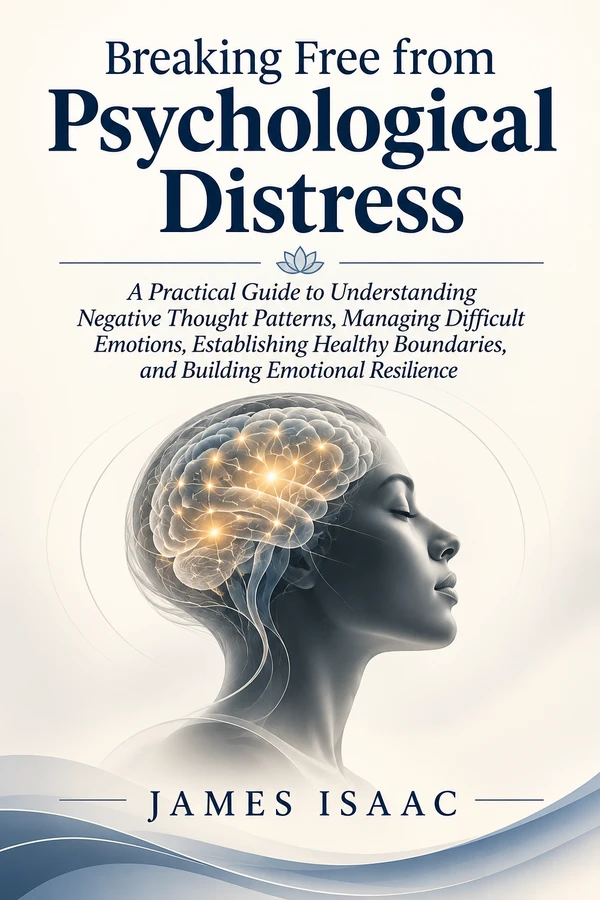
BREAKING FREE FROM PSYCHOLOGICAL DISTRESS
About This Book
Across 12 chapters, James Isaac examines subjects including overthinking, constant worry, emotional triggers, fear, self-doubt, emotional intelligence, self-control, confidence, and resilience during difficult circumstances.
The book combines clear explanations with practical guidance and reflection exercises to help readers better understand their experiences and develop healthier approaches to everyday challenges.
BREAKING FREE FROM PSYCHOLOGICAL DISTRESS provides a practical self-help guide to understanding the relationship between thought patterns, emotional responses, and well-being. Through 12 chapters, James Isaac offers insights and exercises to help readers navigate psychological distress and develop healthier coping strategies.
Who this book is for
- Individuals facing emotional challenges
- Those seeking to improve mental well-being
- Readers interested in self-help and personal development
- Anyone looking to establish healthy boundaries
- People wanting to build emotional resilience
What you'll learn
- Recognize and manage negative thought patterns
- Understand emotional triggers and responses
- Develop emotional intelligence and self-control
- Establish healthy personal boundaries
- Build confidence and resilience in difficult times
- Create a healthier mindset for long-term well-being
Read a free sample 8 pages from the book
BREAKING FREE FROM PSYCHOLOGICAL DISTRESS JAMES ISAAC | 4 INTRODUCTION Life places different demands on people. Work, relationships, financial responsibilities, family expectations, personal ambitions, and unexpected changes can all require emotional and mental effort. At certain times, these demands may become difficult to manage. A person may feel worried without knowing where to begin, become discouraged by ordinary setbacks, or struggle to find peace even when nothing appears seriously wrong on the surface. Such experiences can affect concentration, relationships, decisions, confidence, and the ability to enjoy daily life. Psychological distress is a broad term for the mental and emotional strain people experience when pressures, difficulties, or personal circumstances become hard to cope with. It is not a description of personal weakness, and it does not automatically mean that someone has a mental health disorder. People experience distress in different ways and for different reasons. For some, it may be connected with a major life event. For others, it may build gradually through ongoing responsibilities, unresolved concerns, difficult relationships, or repeated negative ways of interpreting everyday experiences. The important thing is not to judge yourself for struggling. It is to understand what is happening and consider what may help. Ignoring distress does not always make it disappear. Equally, treating every uncomfortable feeling as evidence that something is seriously wrong can create further worry. A balanced approach begins with paying attention to your experience, considering the circumstances, and taking practical steps where possible.
BREAKING FREE FROM PSYCHOLOGICAL DISTRESS JAMES ISAAC | 5 This book was written to make that process easier to understand. It brings together practical ideas about thoughts, emotions, behaviour, relationships, personal boundaries, and resilience. The language is intended to be clear and accessible, while the subject matter is treated with care and seriousness. The aim is to help readers recognise common patterns, reflect on their own experiences, and develop healthier ways of responding to everyday challenges. One of the central ideas in this book is that the way we interpret events can influence how we feel and behave. Two people may experience a similar situation but understand it differently. A difficult comment, for example, may be seen as useful feedback by one person and as proof of personal failure by another. The event matters, but so does the meaning attached to it. Learning to examine interpretations can help prevent assumptions from becoming unquestioned conclusions. Another important idea is that emotions deserve attention without being allowed to make every decision. Anger, sadness, fear, embarrassment, and disappointment are part of human experience. They can communicate that something matters, that a need has not been met, or that a situation requires attention. However, an emotion does not always provide a complete account of what has happened. Recognising a feeling, understanding its possible source, and choosing a thoughtful response are different steps. With practice, a person can learn to respect emotional experiences while responding with greater intention. The book also examines the role of personal boundaries. People often want to maintain good relationships and meet the expectations of those around them. Yet being considerate does not mean accepting every request, remaining available at all times, or neglecting personal responsibilities. Healthy boundaries help define what a person can reasonably offer and what treatment they are prepared to accept. They can support mutual respect, protect
BREAKING FREE FROM PSYCHOLOGICAL DISTRESS JAMES ISAAC | 6 privacy, and reduce the resentment that may develop when personal limits are repeatedly ignored. Self-understanding is another important part of emotional well- being. People may be influenced by earlier experiences, learned expectations, repeated criticism, or difficult periods in life. Recognising these influences can help explain why certain situations feel especially challenging. It does not mean that the past must determine the future. A person can learn from experience, reconsider familiar beliefs, develop new skills, and make different choices. Growth becomes more practical when it begins with an honest understanding of the present rather than an unrealistic demand to become a completely different person overnight. The chapters are arranged to build understanding gradually. They begin by explaining psychological distress and the effects of unhelpful thought patterns. They then explore why people sometimes take situations personally, how overthinking and worry operate, and why certain experiences trigger strong emotional responses. Later chapters consider fear, self-doubt, acceptance, personal boundaries, emotional intelligence, self-respect, and resilience. The final chapter brings these ideas together into a practical approach to long-term emotional well-being. Each chapter includes explanations and examples to make the subject easier to apply to ordinary life. Reflection exercises are included to help readers examine personal patterns and identify useful next steps. These exercises are not examinations, and there are no perfect answers. They are opportunities to think carefully about what is happening, what can be changed, and where additional support may be needed. It is important to understand the limits of self-help. This book is educational; it is not a medical or psychological diagnosis, and it does not replace professional assessment, counselling, or treatment. Psychological distress can have many causes, and similar experiences may require different forms of support. If emotional
BREAKING FREE FROM PSYCHOLOGICAL DISTRESS JAMES ISAAC | 7 difficulties are persistent, severe, or interfering with sleep, work, relationships, or everyday responsibilities, consider speaking with a qualified mental health professional or healthcare provider. If you are in immediate danger or cannot keep yourself safe, seek urgent local assistance. The suggestions in this book should also be applied with judgement. Not every difficult situation can be resolved through a change in thinking. Some problems require practical action, reliable information, professional advice, or protection from harmful behaviour. A person experiencing abuse, intimidation, discrimination, or unsafe conditions should not be encouraged to tolerate mistreatment in the name of emotional strength. Understanding your own responses is valuable, but it does not remove the right to seek safety, fairness, and support. There is no requirement to read the book quickly or to apply every idea at once. You may find that one chapter speaks directly to a concern you are facing, while another becomes more relevant later. Read at a pace that allows you to understand the material. Pause at the exercises, write down your answers if useful, and return to sections when circumstances change. Small, consistent actions are often more sustainable than ambitious plans that are difficult to maintain. Most importantly, do not measure your progress by expecting yourself to feel positive every day. A healthier mindset does not eliminate every difficult emotion or guarantee that life will follow a particular plan. It helps you recognise what is happening, respond more thoughtfully, protect important needs, and seek assistance when necessary. There will still be setbacks and uncertain moments. What can change is the way you understand them and the choices you make in response. Breaking free from psychological distress is not about escaping the realities of life. It is about developing a more balanced relationship with your thoughts, emotions, responsibilities, and experiences. It
BREAKING FREE FROM PSYCHOLOGICAL DISTRESS JAMES ISAAC | 8 begins with awareness, grows through practice, and is supported by patience and appropriate help. You do not have to change everything today. Begin with a willingness to understand yourself more clearly, take one useful step, and continue learning as you move forward.
BREAKING FREE FROM PSYCHOLOGICAL DISTRESS JAMES ISAAC | 9 CHAPTER 1 UNDERSTANDING PSYCHOLOGICAL DISTRESS Psychological distress is an experience many people encounter at different stages of life, although they may not always recognise it by that name. It can appear during a period of intense pressure, after a disappointing event, or through the gradual accumulation of concerns that have not been adequately addressed. A person may find it difficult to concentrate, lose interest in activities, become unusually irritable, or feel mentally exhausted without immediately understanding why. The term describes a broad range of unpleasant mental and emotional experiences. It may include worry, sadness, frustration, fear, tension, helplessness, or a sense of being overwhelmed. These experiences can affect the way people think, feel, behave, and manage their responsibilities. Psychological distress is not automatically a mental health diagnosis, nor does experiencing it mean that someone is weak. It is a sign that a person is facing some form of strain and may need time, practical changes, support, or professional care. Understanding distress begins with recognising that it is not always caused by one event. Several factors may contribute at the same time. A demanding job, financial uncertainty, relationship conflict, health concerns, family responsibilities, and personal expectations can combine to make ordinary life feel difficult to manage. In other cases, a single major change may be enough to disrupt a person's sense of stability. The way distress develops differs from one individual to another. WHAT PSYCHOLOGICAL DISTRESS MEANS Psychological distress refers to mental and emotional discomfort that can arise when a person's circumstances, demands, or internal
BREAKING FREE FROM PSYCHOLOGICAL DISTRESS JAMES ISAAC | 10 experiences become difficult to manage. It is a broad description rather than a specific diagnosis. It can be temporary and closely connected with a particular event, or it can persist and begin to interfere with different areas of daily life. A person experiencing distress may feel under pressure, unsettled, discouraged, or unable to relax. They may be troubled by repeated concerns, struggle to make decisions, or find that their usual ways of coping are no longer enough. Another person may appear calm to others while privately experiencing considerable emotional strain. There is no single appearance or behaviour that identifies every person who is struggling. It is also useful to distinguish distress from the ordinary presence of difficult emotions. Feeling disappointed after a rejection or nervous before an important interview is a normal response to a meaningful situation. These emotions do not necessarily indicate a larger problem. Concern becomes more significant when distress is intense, continues for a prolonged period, repeatedly returns, or affects a person's ability to function and care for themselves. DISTRESS AND EVERYDAY STRESS Stress is a response that can arise when a person faces demands, pressure, or change. It is not always harmful. A manageable amount of pressure may help someone prepare for an examination, meet a deadline, or respond to an important responsibility. Stress can increase alertness and encourage action when a challenge requires attention. However, pressure may become difficult to manage when demands are excessive, last too long, or occur without enough time and resources for recovery. When the person feels unable to cope, the experience may develop into psychological distress. The distinction is not always exact, and people may use the words differently in everyday conversation. What matters is paying attention to the effect that the experience is having.
BREAKING FREE FROM PSYCHOLOGICAL DISTRESS JAMES ISAAC | 11 For example, a worker preparing for a busy week may feel some tension but remain able to organise tasks and rest afterwards. Another worker facing a similar workload may also be dealing with debt, family conflict, and poor sleep. The combined pressure may leave that person feeling overwhelmed and unable to concentrate. The workload is only one part of the picture; the wider circumstances also matter. COMMON SOURCES OF PSYCHOLOGICAL DISTRESS Distress can arise from many areas of life. Understanding possible sources does not automatically resolve a problem, but it can help identify what needs attention. Work and professional responsibilities may create strain when expectations are unclear, workloads are excessive, relationships with colleagues are difficult, or employment feels insecure. People may worry about performance, financial stability, job loss, or the consequences of making mistakes. When work pressure continues without adequate recovery, it may affect health, relationships, and life outside the workplace. Financial concerns can also place considerable pressure on emotional well-being. Difficulty meeting essential expenses, managing debts, supporting dependants, or finding reliable income may create uncertainty that is hard to set aside. Financial strain can affect decisions about housing, education, healthcare, and family responsibilities. Practical guidance and a realistic financial plan may be useful, but the emotional impact should not be ignored. Relationships can be a source of support…
End of sample. The full book is 155 pages on Afri KDP.
Questions about this book
Can this book help me if I'm feeling overwhelmed?
Yes, the book provides practical guidance to help you understand psychological distress and offers strategies to manage overwhelming emotions.
Loading reviews...

Loading…
A download link appears on this page as soon as your payment is confirmed, and a permanent copy of the link is emailed to you.
By card from anywhere. In Nigeria you can also pay by bank transfer, USSD or mobile money. Your card details are entered on Paystack's secure page, never on AfriKDP.
Yes. The file opens on phones, tablets, computers and eReaders.
Yes, with an AfriKDP reading plan, which opens every book in the online reader and pays the author for every page you read.
Write to [email protected] with your email address and we will help. See our return policy.